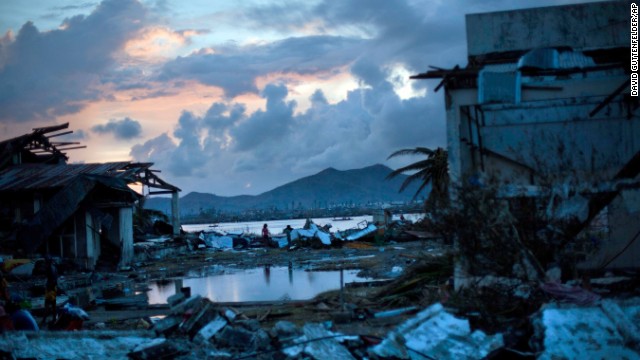
 Survivors walk through the ruins of their neighborhood on
the outskirts of Tacloban, Philippines, on Wednesday, November 13. Haiyan, one
of the strongest storms in recorded history, decimated parts of the Philippines
over the weekend. President Benigno Aquino III said the typhoon may have killed
as many as 2,500 people.
Survivors walk through the ruins of their neighborhood on
the outskirts of Tacloban, Philippines, on Wednesday, November 13. Haiyan, one
of the strongest storms in recorded history, decimated parts of the Philippines
over the weekend. President Benigno Aquino III said the typhoon may have killed
as many as 2,500 people.

A man
sits in front of his destroyed business on November 13 in Tacloban.
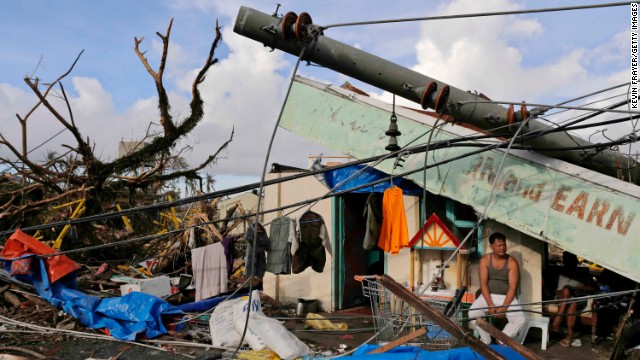 A man
sits in front of his destroyed business on November 13 in Tacloban.
A man
sits in front of his destroyed business on November 13 in Tacloban.
On
November 13, a family tries to use a ceiling fan to generate electricity,
desperate to charge mobile phones to search for family and friends in the wake
of Typhoon Haiyan in Cebu province.
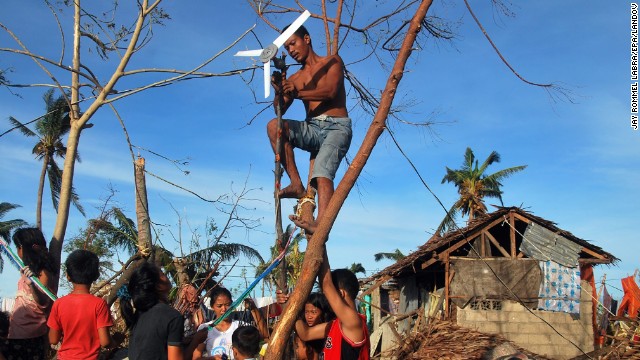 On
November 13, a family tries to use a ceiling fan to generate electricity,
desperate to charge mobile phones to search for family and friends in the wake
of Typhoon Haiyan in Cebu province.
On
November 13, a family tries to use a ceiling fan to generate electricity,
desperate to charge mobile phones to search for family and friends in the wake
of Typhoon Haiyan in Cebu province.
An
injured man rests beneath a picture of Jesus Christ in Tacloban on November
13.
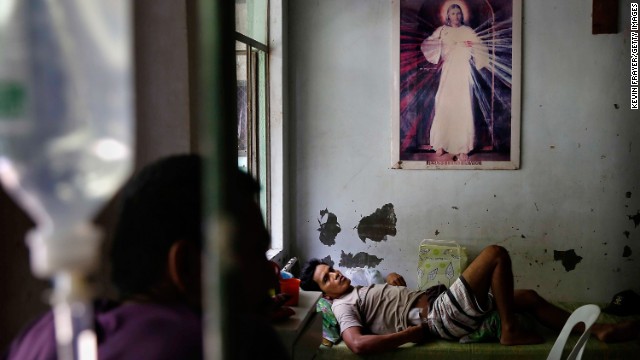 An
injured man rests beneath a picture of Jesus Christ in Tacloban on November
13.
An
injured man rests beneath a picture of Jesus Christ in Tacloban on November
13.
A man
takes a shower amid rubble in Tacloban on November 13.
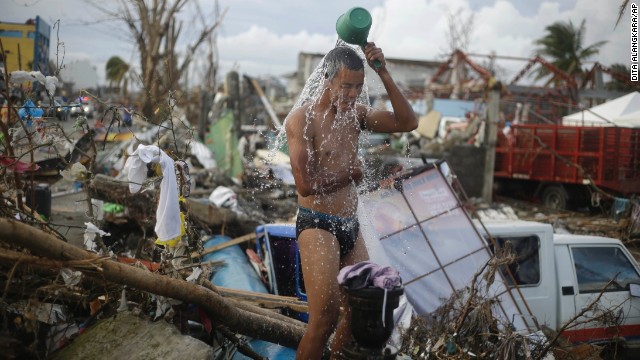 A man
takes a shower amid rubble in Tacloban on November 13.
A man
takes a shower amid rubble in Tacloban on November 13.
A rescue
team wades into floodwater to retrieve a body in Tacloban on November 13.
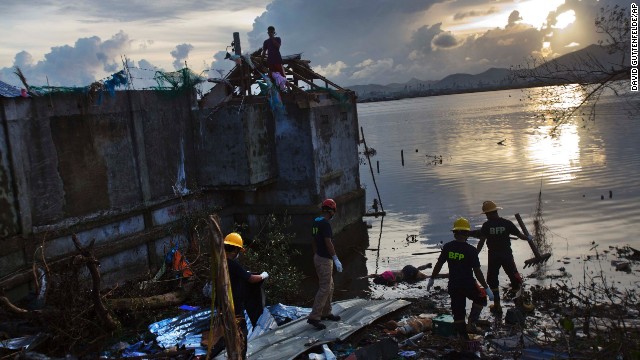 A rescue
team wades into floodwater to retrieve a body in Tacloban on November 13.
A rescue
team wades into floodwater to retrieve a body in Tacloban on November 13.
Residents
take shelter in a Tacloban church on November 13 in the aftermath of Typhoon
Haiyan.
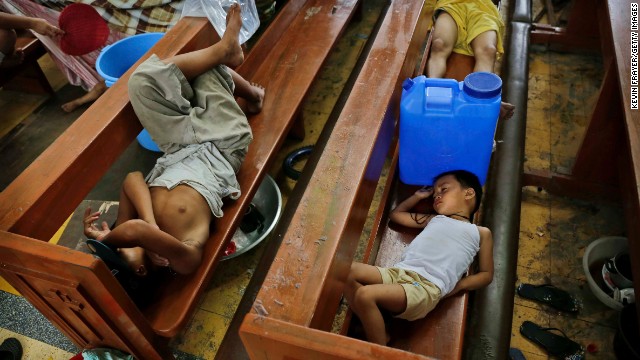 Residents
take shelter in a Tacloban church on November 13 in the aftermath of Typhoon
Haiyan.
Residents
take shelter in a Tacloban church on November 13 in the aftermath of Typhoon
Haiyan.
Residents
make their way through a destroyed neighborhood in Tacloban on November
13.
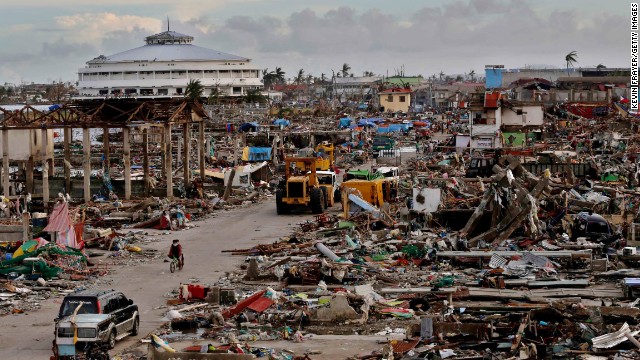 Residents
make their way through a destroyed neighborhood in Tacloban on November
13.
Residents
make their way through a destroyed neighborhood in Tacloban on November
13.
A man
sits in front of his destroyed business in Tacloban on November 13.
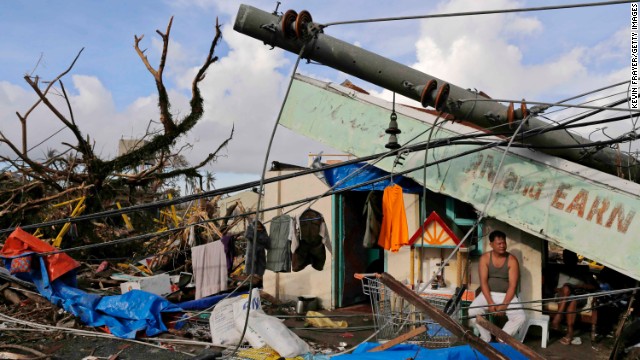 A man
sits in front of his destroyed business in Tacloban on November 13.
A man
sits in front of his destroyed business in Tacloban on November 13.
A boy
cycles past a coffin left on a street in Tacloban on November 13.
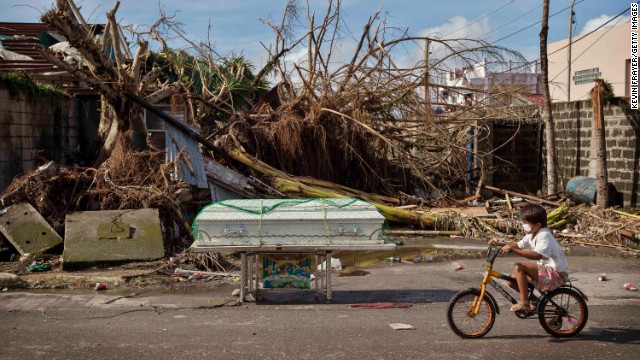 A boy
cycles past a coffin left on a street in Tacloban on November 13.
A boy
cycles past a coffin left on a street in Tacloban on November 13.
A man
looks at his home destroyed by Typhoon Hayian in Tacloban on November 13.
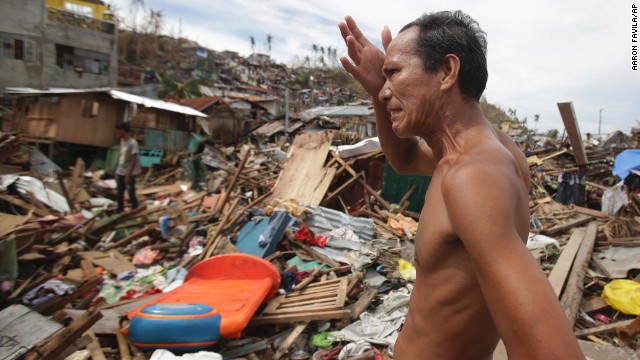 A man
looks at his home destroyed by Typhoon Hayian in Tacloban on November 13.
A man
looks at his home destroyed by Typhoon Hayian in Tacloban on November 13.
Body
bags are lined up in the typhoon's aftermath in Tacloban, one of the hardest-hit
cities, on November 13.
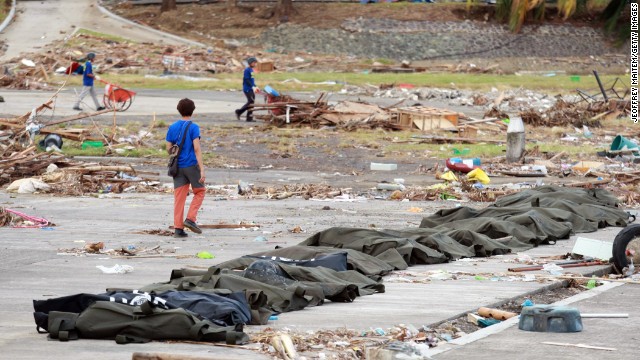 Body
bags are lined up in the typhoon's aftermath in Tacloban, one of the hardest-hit
cities, on November 13.
Body
bags are lined up in the typhoon's aftermath in Tacloban, one of the hardest-hit
cities, on November 13.
Survivors prepare to board a military plane November 13 at
the airport in Tacloban.
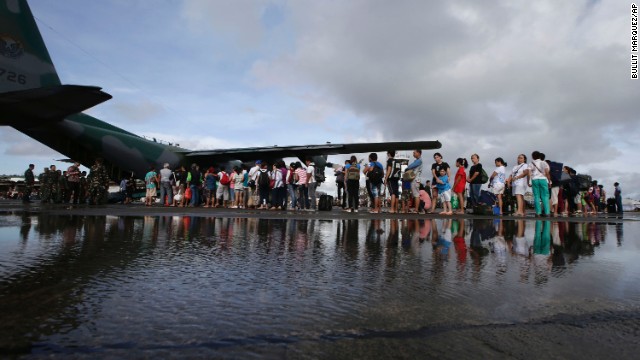 Survivors prepare to board a military plane November 13 at
the airport in Tacloban.
Survivors prepare to board a military plane November 13 at
the airport in Tacloban.
An
aerial view shows signs pleading for help and food scrawled on a road in the
coastal town of Tanauan on November 13.
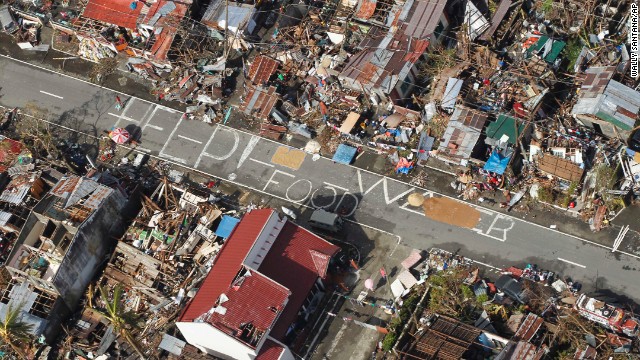 An
aerial view shows signs pleading for help and food scrawled on a road in the
coastal town of Tanauan on November 13.
An
aerial view shows signs pleading for help and food scrawled on a road in the
coastal town of Tanauan on November 13.
Soldiers
help a woman after she collapsed while waiting in line to board a military plane
at Tacloban's airport November 13.
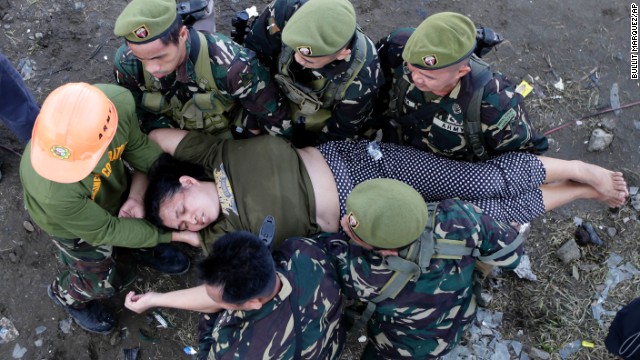 Soldiers
help a woman after she collapsed while waiting in line to board a military plane
at Tacloban's airport November 13.
Soldiers
help a woman after she collapsed while waiting in line to board a military plane
at Tacloban's airport November 13.
Survivors wait to be evacuated from Tacloban on November
13.
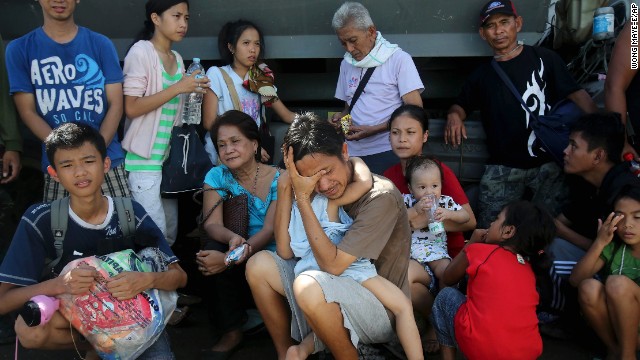 Survivors wait to be evacuated from Tacloban on November
13.
Survivors wait to be evacuated from Tacloban on November
13.
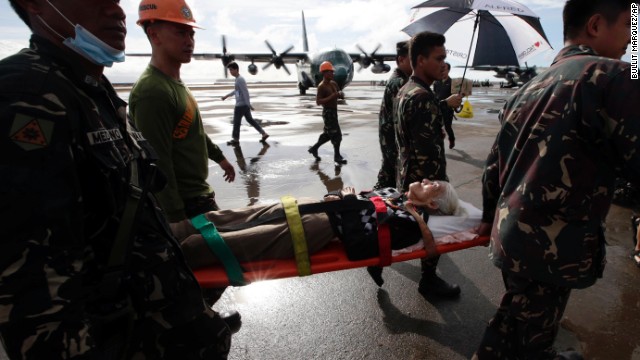
An
injured survivor gets carried on a stretcher before being airlifted from
Tacloban's airport November 13.
 An
injured survivor gets carried on a stretcher before being airlifted from
Tacloban's airport November 13.
An
injured survivor gets carried on a stretcher before being airlifted from
Tacloban's airport November 13.
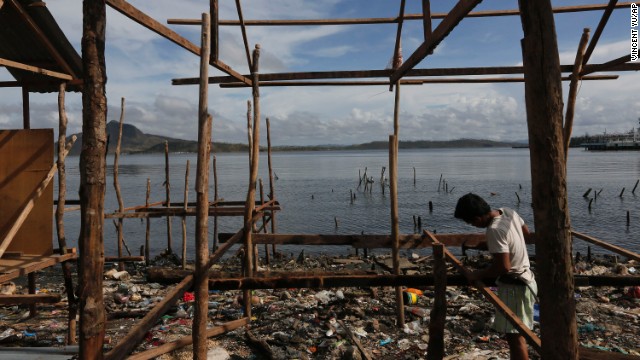
A
survivor begins to rebuild his house in Tacloban on November 13.
 A
survivor begins to rebuild his house in Tacloban on November 13.
A
survivor begins to rebuild his house in Tacloban on November 13.
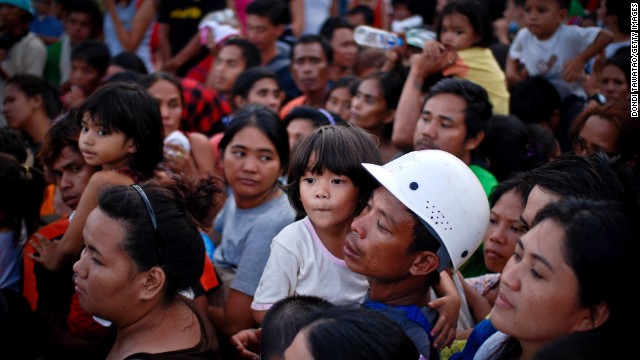
Evacuees
wait to board a military aircraft in Leyte on Tuesday, November 12.
 Evacuees
wait to board a military aircraft in Leyte on Tuesday, November 12.
Evacuees
wait to board a military aircraft in Leyte on Tuesday, November 12.
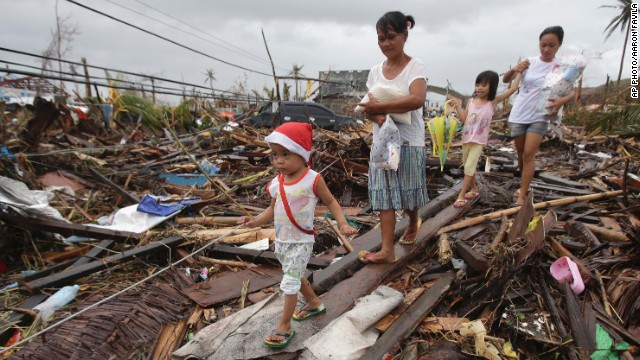
People
walk through damage in Tacloban on November 12.
 People
walk through damage in Tacloban on November 12.
People
walk through damage in Tacloban on November 12.
A young
man waits at the airport November 12 in hopes of being evacuated from
Tacloban.
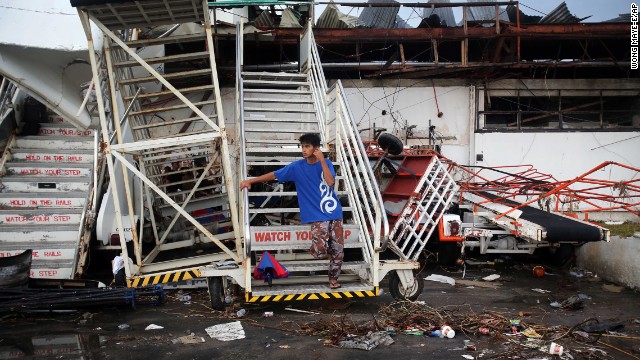 A young
man waits at the airport November 12 in hopes of being evacuated from
Tacloban.
A young
man waits at the airport November 12 in hopes of being evacuated from
Tacloban.
A woman
comforts a crying relative as a plane leaves the Tacloban airport November
12.
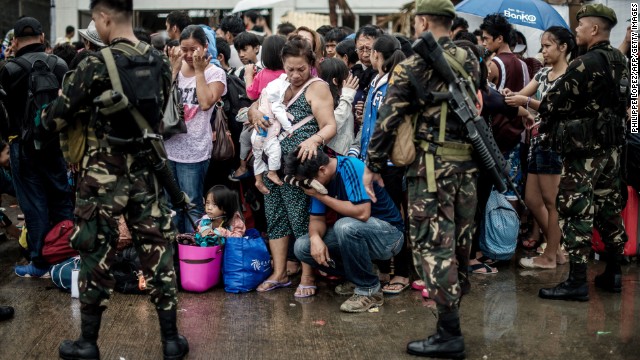 A woman
comforts a crying relative as a plane leaves the Tacloban airport November
12.
A woman
comforts a crying relative as a plane leaves the Tacloban airport November
12.
A man
sits crying on a packed aircraft in Tacloban on November 12.
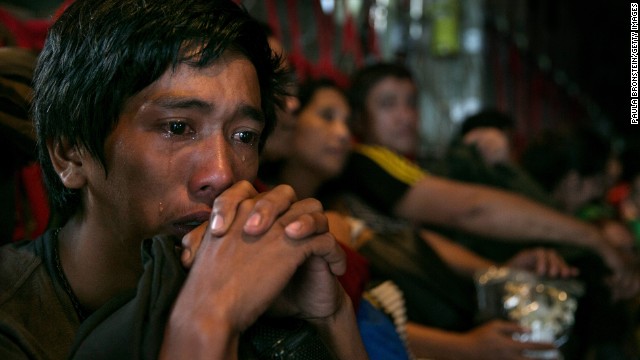 A man
sits crying on a packed aircraft in Tacloban on November 12.
A man
sits crying on a packed aircraft in Tacloban on November 12.
Debris
lays scattered around a damaged home near the Tacloban airport on November
12.
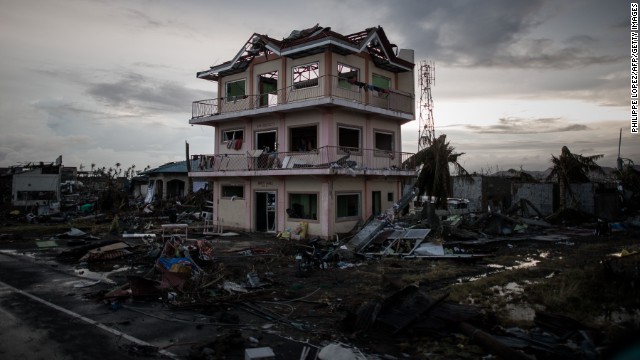 Debris
lays scattered around a damaged home near the Tacloban airport on November
12.
Debris
lays scattered around a damaged home near the Tacloban airport on November
12.
A girl
sits inside a bus as she waits for a ferry in Matnog, Philippines, on November
12.
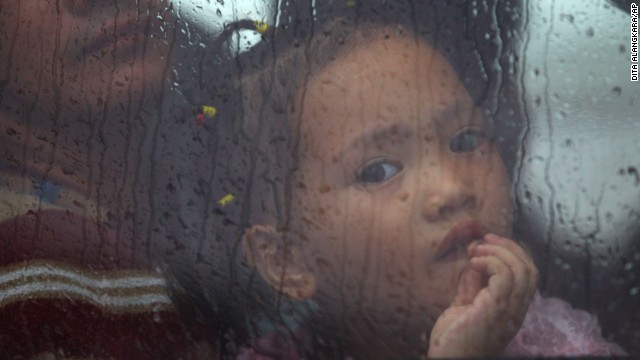 A girl
sits inside a bus as she waits for a ferry in Matnog, Philippines, on November
12.
A girl
sits inside a bus as she waits for a ferry in Matnog, Philippines, on November
12.
Residents carry bags of rice from a Tacloban warehouse
that they stormed November 11 because of a food shortage.
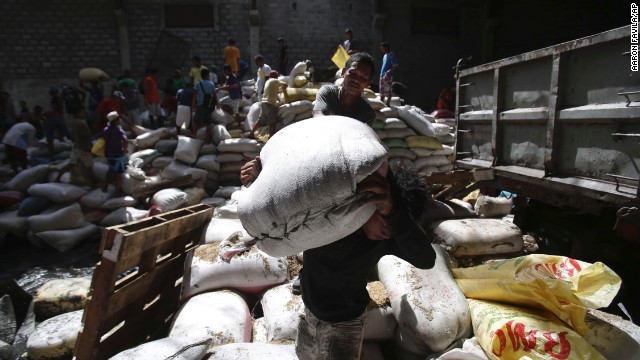 Residents carry bags of rice from a Tacloban warehouse
that they stormed November 11 because of a food shortage.
Residents carry bags of rice from a Tacloban warehouse
that they stormed November 11 because of a food shortage.
Survivors in Tacloban board a military plane bound for the
Philippine capital of Manila on November 11.
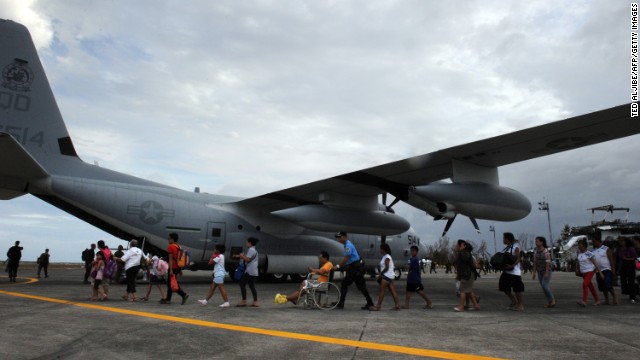 Survivors in Tacloban board a military plane bound for the
Philippine capital of Manila on November 11.
Survivors in Tacloban board a military plane bound for the
Philippine capital of Manila on November 11.
Police
line up bodies for processing in Tacloban on November 12.
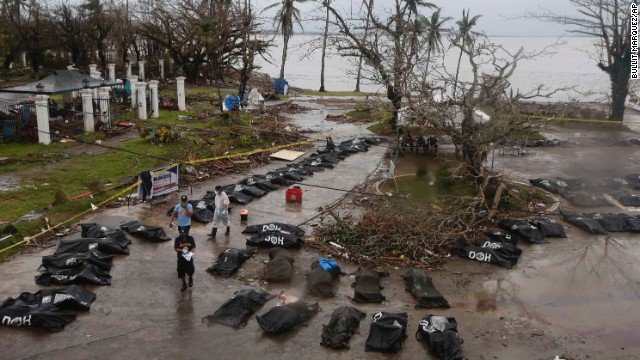 Police
line up bodies for processing in Tacloban on November 12.
Police
line up bodies for processing in Tacloban on November 12.
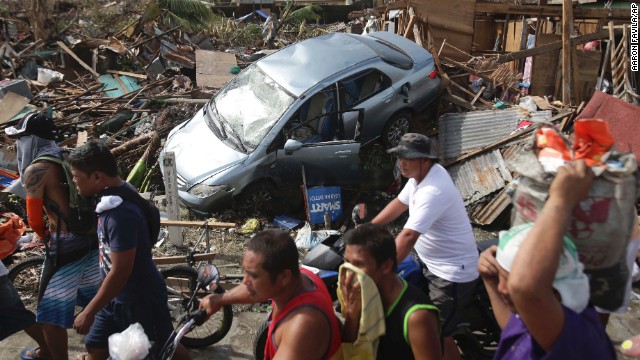
People
in Tacloban pass debris on November 11.
 People
in Tacloban pass debris on November 11.
People
in Tacloban pass debris on November 11.
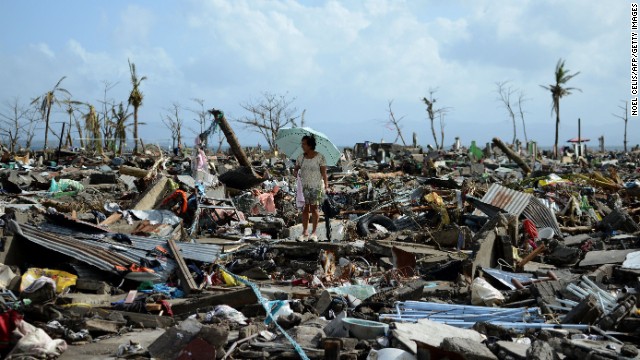
A woman
in Tacloban walks amid the debris of destroyed houses on November 11.
 A woman
in Tacloban walks amid the debris of destroyed houses on November 11.
A woman
in Tacloban walks amid the debris of destroyed houses on November 11.
People
make their way across a flooded street in Shangsi, China, on November 11. Haiyan
moved toward Vietnam and south China after devastating the Philippines.
 People
make their way across a flooded street in Shangsi, China, on November 11. Haiyan
moved toward Vietnam and south China after devastating the Philippines.
People
make their way across a flooded street in Shangsi, China, on November 11. Haiyan
moved toward Vietnam and south China after devastating the Philippines.
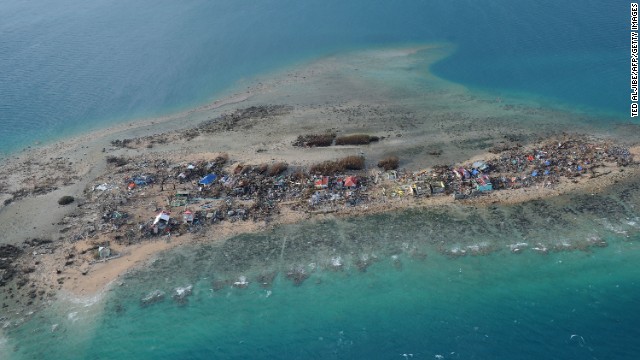
Buildings lie in ruins on Eastern Samar's Victory
Island.
 Buildings lie in ruins on Eastern Samar's Victory
Island.
Buildings lie in ruins on Eastern Samar's Victory
Island.
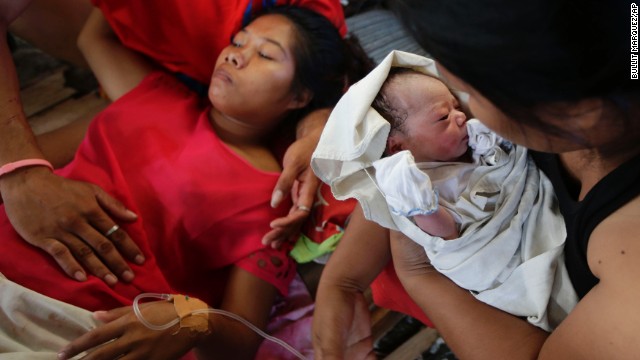
Emily
Ortega rests on November 11 after giving birth to Bea Joy at an improvised
clinic at the Tacloban airport.
 Emily
Ortega rests on November 11 after giving birth to Bea Joy at an improvised
clinic at the Tacloban airport.
Emily
Ortega rests on November 11 after giving birth to Bea Joy at an improvised
clinic at the Tacloban airport.
U.S.
Marine Corps Osprey aircraft arrive at Manila's Villamor Airbase to deliver
humanitarian aid on November 11.
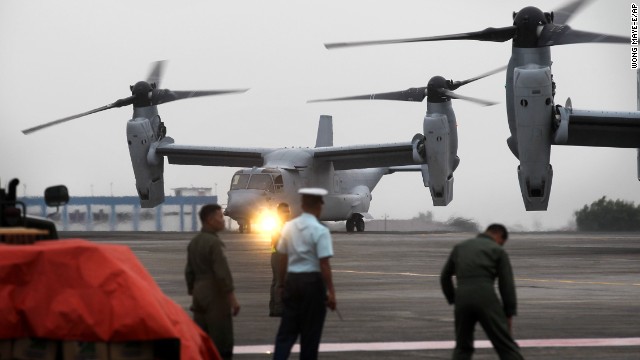 U.S.
Marine Corps Osprey aircraft arrive at Manila's Villamor Airbase to deliver
humanitarian aid on November 11.
U.S.
Marine Corps Osprey aircraft arrive at Manila's Villamor Airbase to deliver
humanitarian aid on November 11.
People
ride past destruction in Tacloban on Sunday, November 10.
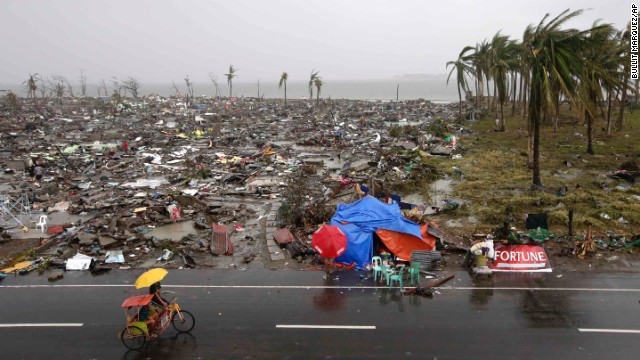 People
ride past destruction in Tacloban on Sunday, November 10.
People
ride past destruction in Tacloban on Sunday, November 10.
A body
lies amid the Tacloban devastation on November 10.
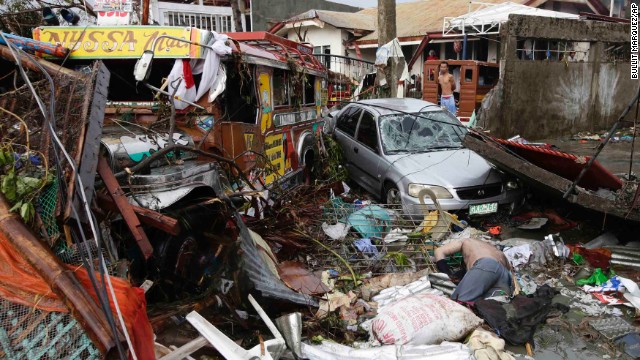 A body
lies amid the Tacloban devastation on November 10.
A body
lies amid the Tacloban devastation on November 10.
People
cover their noses to block the smell of bodies in Tacloban on November
10.
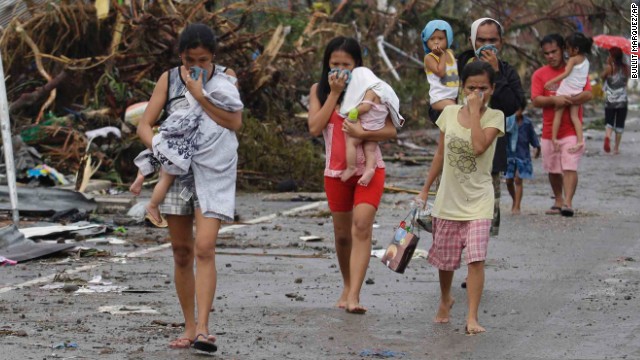 People
cover their noses to block the smell of bodies in Tacloban on November
10.
People
cover their noses to block the smell of bodies in Tacloban on November
10.
Bodies
of victims lie along a Tacloban road on November 10.
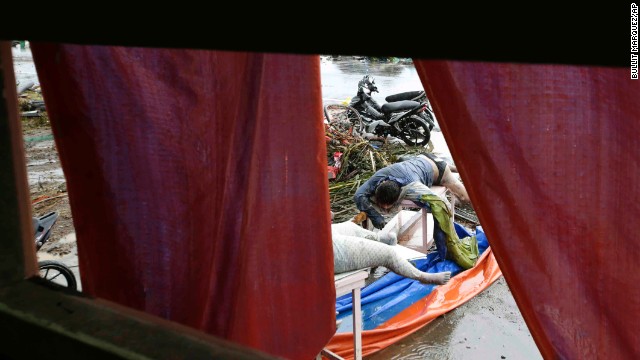 Bodies
of victims lie along a Tacloban road on November 10.
Bodies
of victims lie along a Tacloban road on November 10.
A large
boat sits aground, surrounded by debris in Tacloban on November 10.
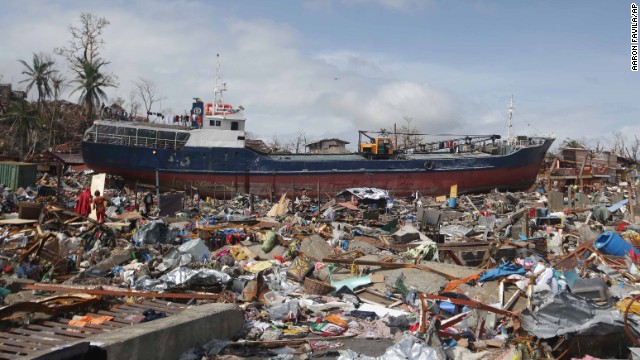 A large
boat sits aground, surrounded by debris in Tacloban on November 10.
A large
boat sits aground, surrounded by debris in Tacloban on November 10.
People
walk past the Tacloban devastation on November 10.
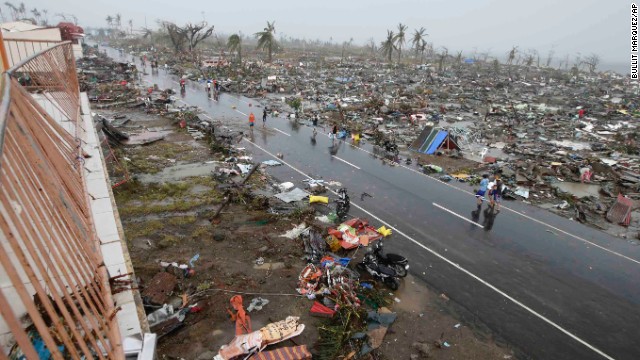 People
walk past the Tacloban devastation on November 10.
People
walk past the Tacloban devastation on November 10.
People
stand under a shelter in Tacloban.
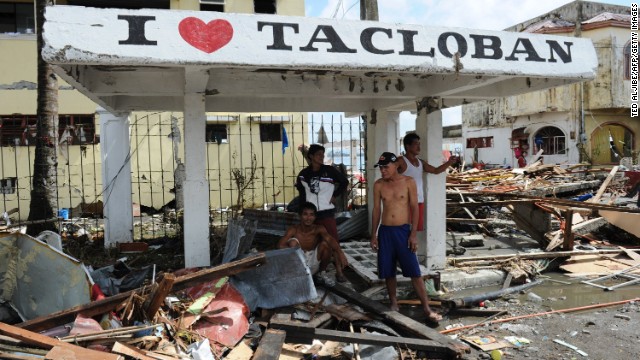 People
stand under a shelter in Tacloban.
People
stand under a shelter in Tacloban.
A girl
peeks out from a makeshift shelter in Tacloban.
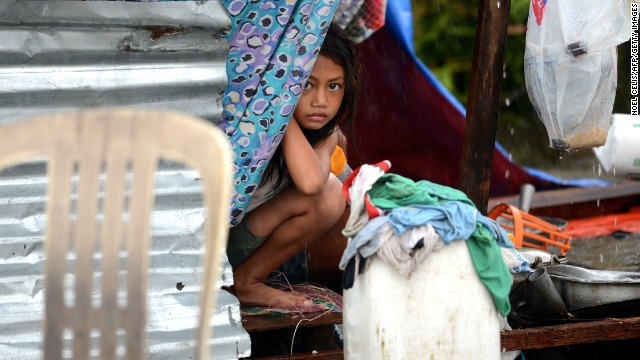 A girl
peeks out from a makeshift shelter in Tacloban.
A girl
peeks out from a makeshift shelter in Tacloban.
Typhoon
survivors wait to receive relief goods at the Tacloban airport on November
10.
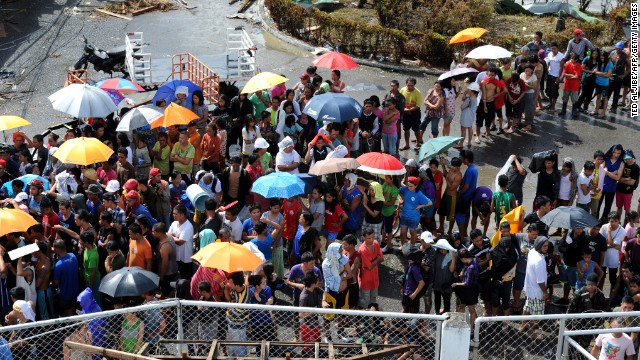 Typhoon
survivors wait to receive relief goods at the Tacloban airport on November
10.
Typhoon
survivors wait to receive relief goods at the Tacloban airport on November
10.
A woman
mourns in front of her husband's dead body November 10 in Tacloban.
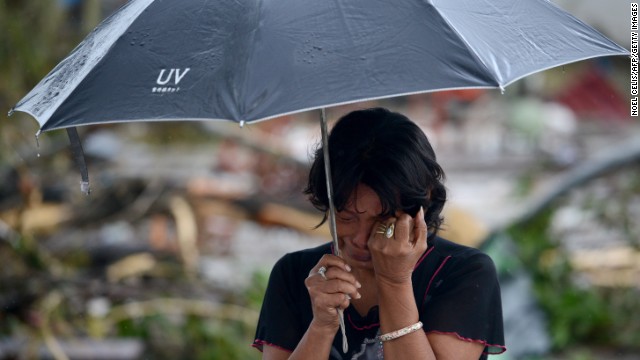 A woman
mourns in front of her husband's dead body November 10 in Tacloban.
A woman
mourns in front of her husband's dead body November 10 in Tacloban.
Fallen
trees litter the ground at the Tacloban airport on Saturday, November 9.
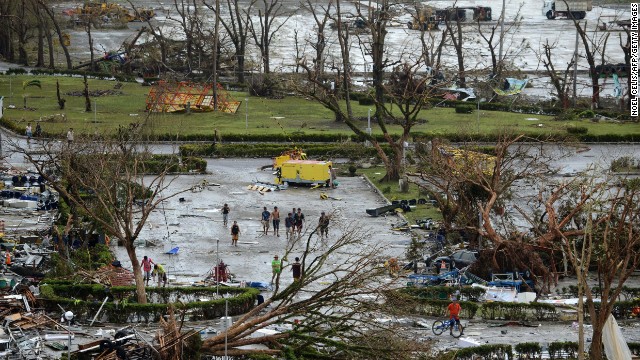 Fallen
trees litter the ground at the Tacloban airport on Saturday, November 9.
Fallen
trees litter the ground at the Tacloban airport on Saturday, November 9.
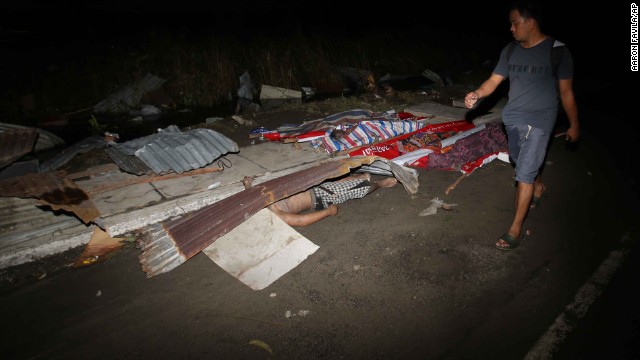
A
resident passes victims' bodies on a Tacloban street November 9.
 A
resident passes victims' bodies on a Tacloban street November 9.
A
resident passes victims' bodies on a Tacloban street November 9.
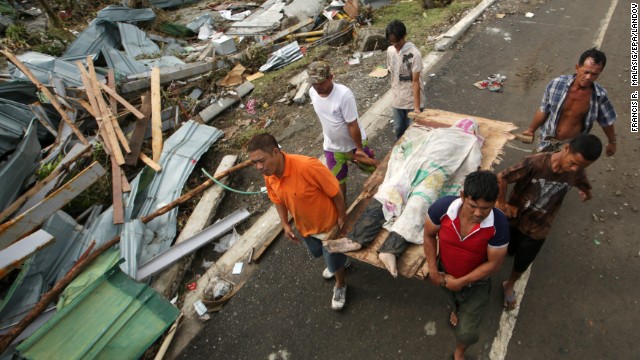
People
in Tacloban carry a victim of the typhoon November 9.
 People
in Tacloban carry a victim of the typhoon November 9.
People
in Tacloban carry a victim of the typhoon November 9.
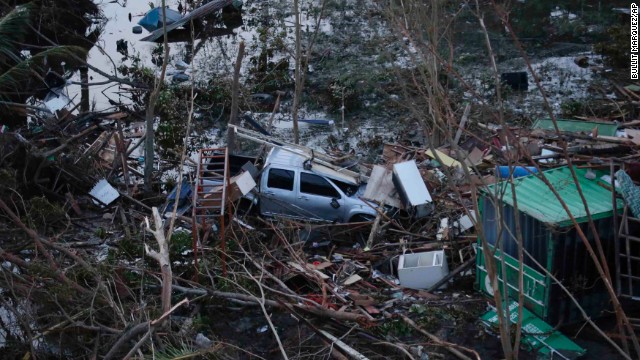
A
vehicle lies amid Tacloban debris on November 9.
 A
vehicle lies amid Tacloban debris on November 9.
A
vehicle lies amid Tacloban debris on November 9.
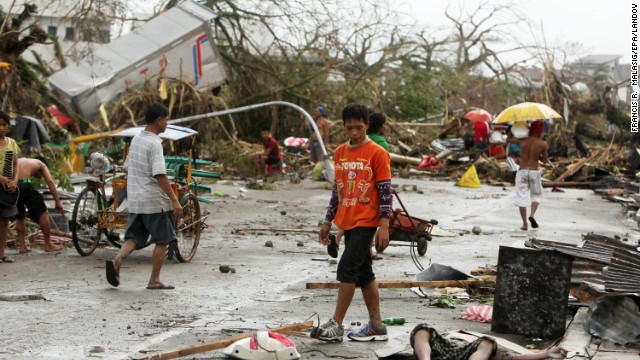
People
walk past a victim left on the side of a road in Tacloban.
 People
walk past a victim left on the side of a road in Tacloban.
People
walk past a victim left on the side of a road in Tacloban.
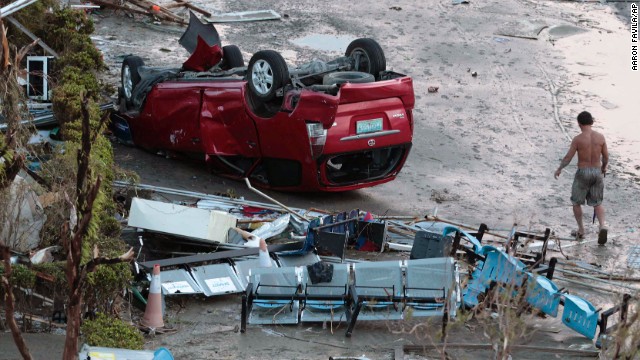
A
resident passes an overturned car in Tacloban on November 9.
 A
resident passes an overturned car in Tacloban on November 9.
A
resident passes an overturned car in Tacloban on November 9.
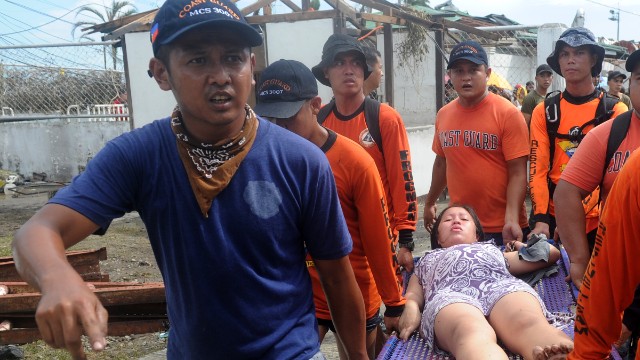
Rescue
workers carry a woman about to give birth November 9 at a makeshift medical
center at the Tacloban airport.
 Rescue
workers carry a woman about to give birth November 9 at a makeshift medical
center at the Tacloban airport.
Rescue
workers carry a woman about to give birth November 9 at a makeshift medical
center at the Tacloban airport.
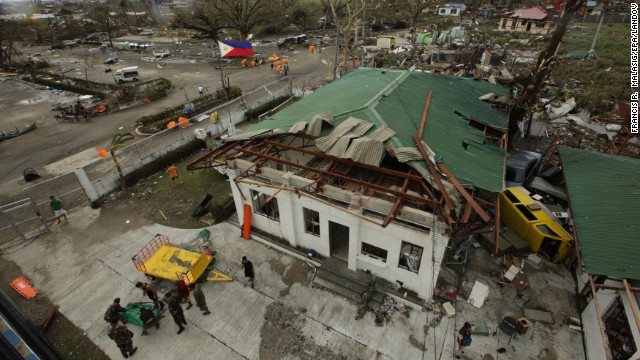
An
airport lies in ruins in Tacloban.
 An
airport lies in ruins in Tacloban.
An
airport lies in ruins in Tacloban.
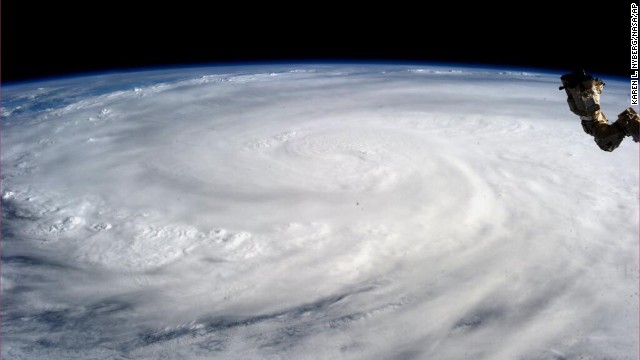
Astronaut Karen L. Nyberg took a picture of the typhoon
from the International Space Station on November 9.
 Astronaut Karen L. Nyberg took a picture of the typhoon
from the International Space Station on November 9.
Astronaut Karen L. Nyberg took a picture of the typhoon
from the International Space Station on November 9.
Women
walk past fallen trees and destroyed houses in Tacloban on November 9. Residents
scoured supermarkets for water and food as they slowly emerged on streets
littered with debris.
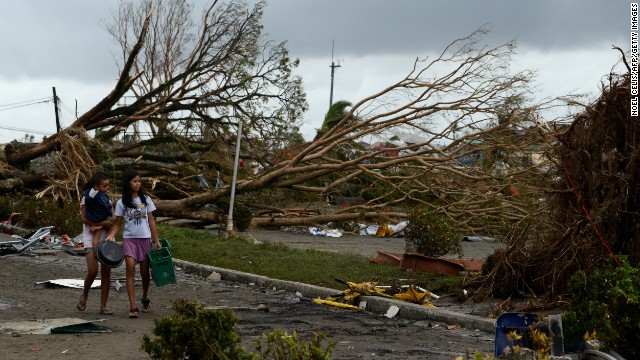 Women
walk past fallen trees and destroyed houses in Tacloban on November 9. Residents
scoured supermarkets for water and food as they slowly emerged on streets
littered with debris.
Women
walk past fallen trees and destroyed houses in Tacloban on November 9. Residents
scoured supermarkets for water and food as they slowly emerged on streets
littered with debris.
A
soldier pulls a cable inside the devastated airport tower in Tacloban.
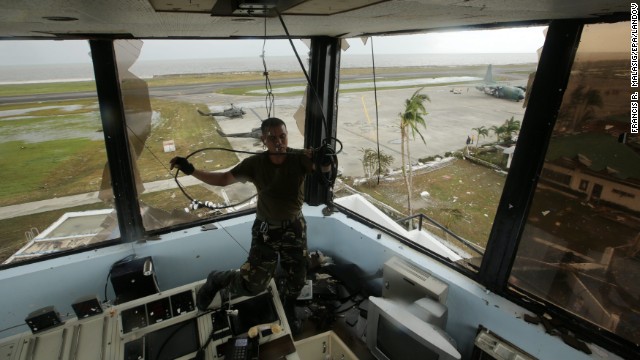 A
soldier pulls a cable inside the devastated airport tower in Tacloban.
A
soldier pulls a cable inside the devastated airport tower in Tacloban.
Tacloban
houses are destroyed by the strong winds caused by the typhoon.
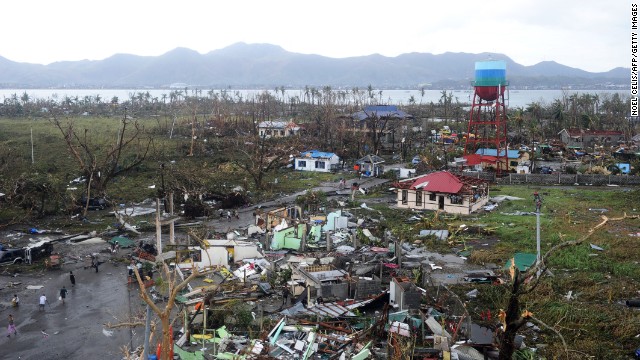 Tacloban
houses are destroyed by the strong winds caused by the typhoon.
Tacloban
houses are destroyed by the strong winds caused by the typhoon.
Dark
clouds brought by Haiyan loom over Manila skyscrapers on November 8.
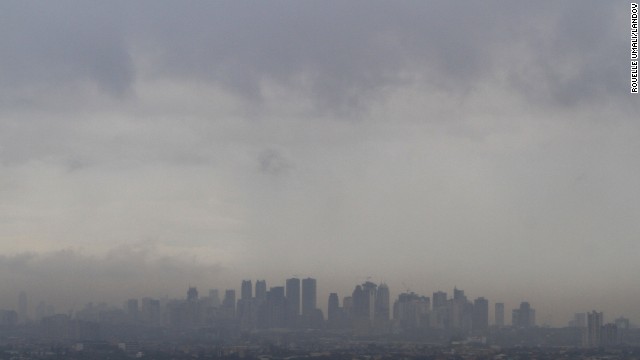 Dark
clouds brought by Haiyan loom over Manila skyscrapers on November 8.
Dark
clouds brought by Haiyan loom over Manila skyscrapers on November 8.
A woman
carries a baby across a river November 8 at a coastal village in Las Pinas,
Philippines.
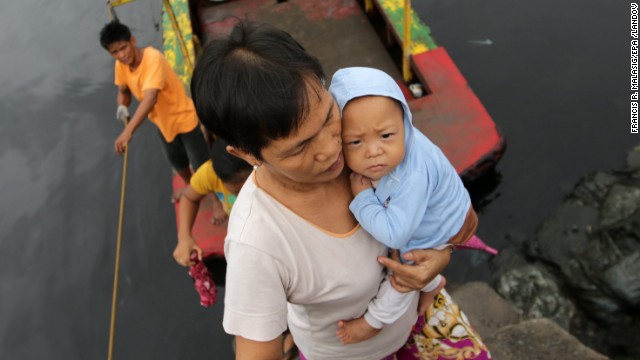 A woman
carries a baby across a river November 8 at a coastal village in Las Pinas,
Philippines.
A woman
carries a baby across a river November 8 at a coastal village in Las Pinas,
Philippines.
A
resident walks along a fishing village in Bacoor, Philippines, on November
8.
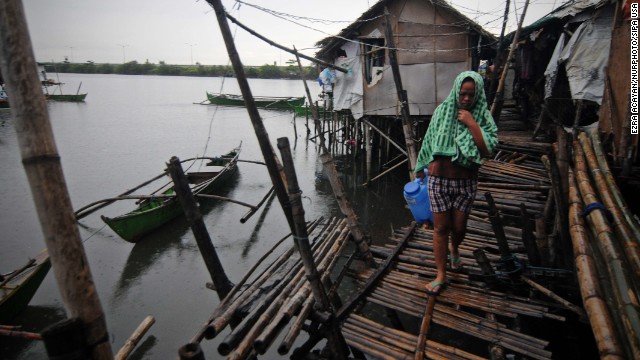 A
resident walks along a fishing village in Bacoor, Philippines, on November
8.
A
resident walks along a fishing village in Bacoor, Philippines, on November
8.
A house
in Legazpi, Philippines, is engulfed by storm surge November 8.
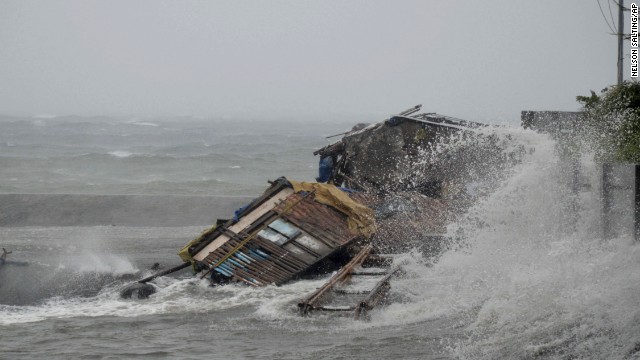 A house
in Legazpi, Philippines, is engulfed by storm surge November 8.
A house
in Legazpi, Philippines, is engulfed by storm surge November 8.
A child
wraps himself in a blanket inside a makeshift house along a Bacoor fishing
village.
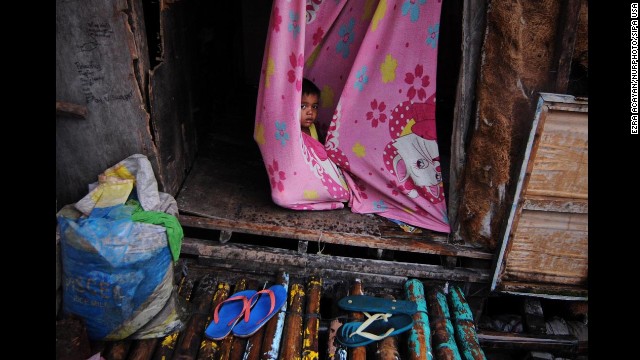 A child
wraps himself in a blanket inside a makeshift house along a Bacoor fishing
village.
A child
wraps himself in a blanket inside a makeshift house along a Bacoor fishing
village.
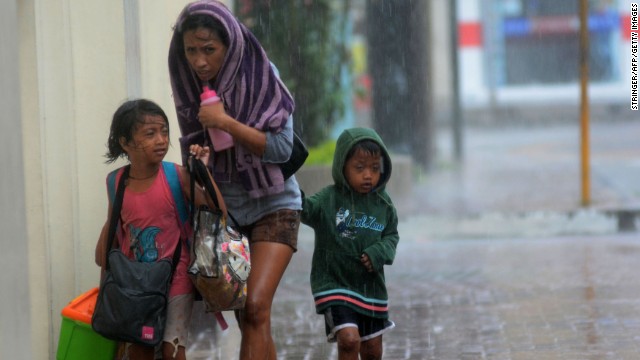
A woman
and her children head for an evacuation center November 8 amid strong winds in
Cebu City, Philippines.
 A woman
and her children head for an evacuation center November 8 amid strong winds in
Cebu City, Philippines.
A woman
and her children head for an evacuation center November 8 amid strong winds in
Cebu City, Philippines.
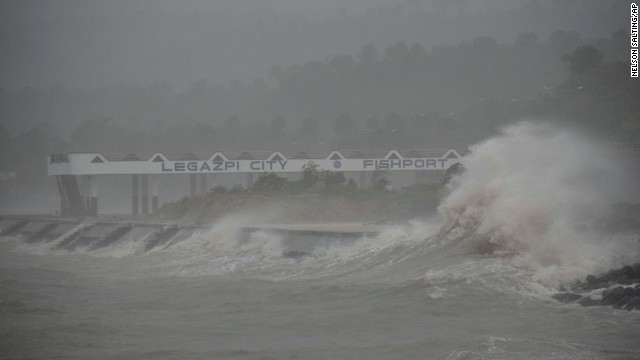
Huge
waves from Haiyan hit the shoreline in Legazpi on November 8.
 Huge
waves from Haiyan hit the shoreline in Legazpi on November 8.
Huge
waves from Haiyan hit the shoreline in Legazpi on November 8.
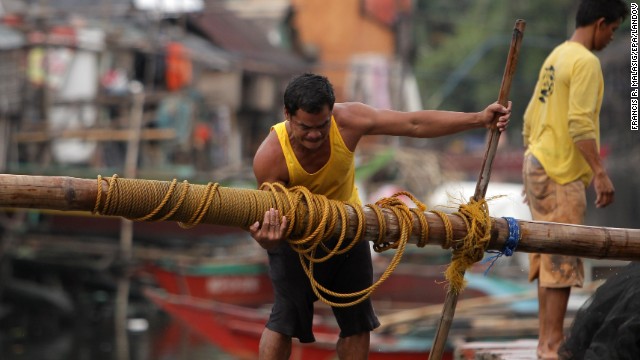
A
fisherman lifts a post to reinforce his home at a coastal village in Las Pinas
on November 8.
 A
fisherman lifts a post to reinforce his home at a coastal village in Las Pinas
on November 8.
A
fisherman lifts a post to reinforce his home at a coastal village in Las Pinas
on November 8.
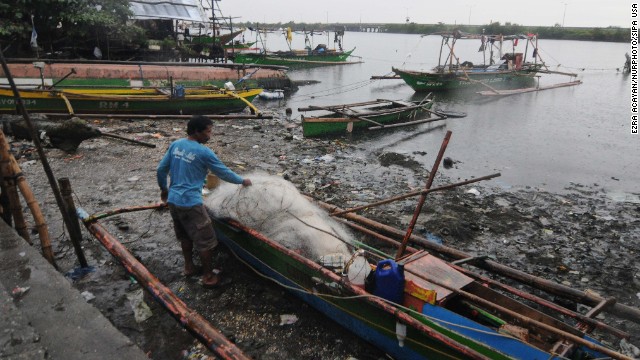
A
resident unloads nets off a fishing boat in Bacoor on November 8.
 A
resident unloads nets off a fishing boat in Bacoor on November 8.
A
resident unloads nets off a fishing boat in Bacoor on November 8.
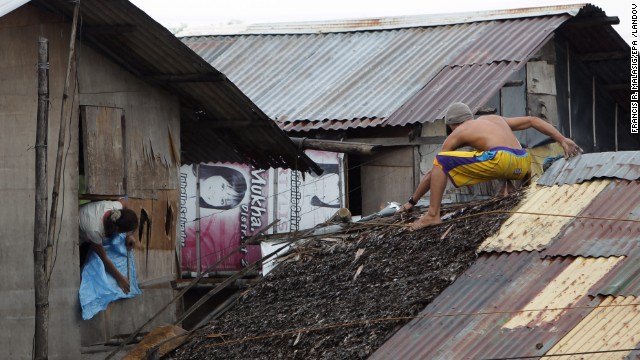
Residents reinforce their homes in Las Pinas on November
8.
 Residents reinforce their homes in Las Pinas on November
8.
Residents reinforce their homes in Las Pinas on November
8.
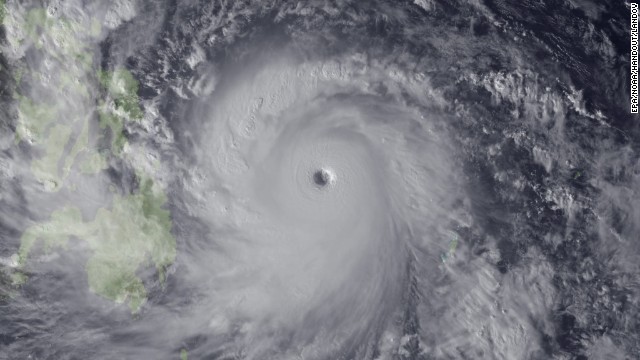
The
storm approaches the Philippines in this satellite image taken Thursday,
November 7, by the National Oceanic and Atmospheric Administration.
 The
storm approaches the Philippines in this satellite image taken Thursday,
November 7, by the National Oceanic and Atmospheric Administration.
The
storm approaches the Philippines in this satellite image taken Thursday,
November 7, by the National Oceanic and Atmospheric Administration.
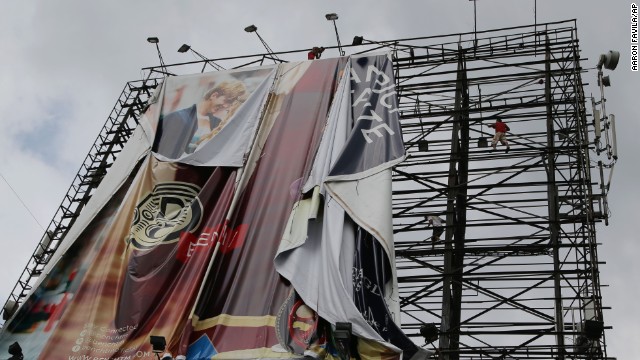
Workers
bring down a billboard in Makati, Philippines, on November 7 before Haiyan makes
landfall.
 Workers
bring down a billboard in Makati, Philippines, on November 7 before Haiyan makes
landfall.
Workers
bring down a billboard in Makati, Philippines, on November 7 before Haiyan makes
landfall.
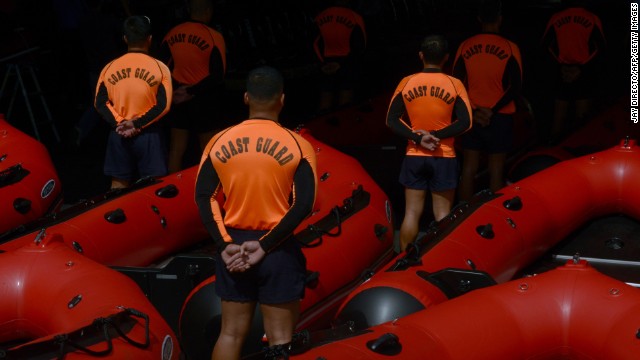
Philippine Coast Guard personnel stand in formation beside
newly acquired rubber boats after a blessing ceremony in Manila on Wednesday,
November 6. The boats were to be deployed to the central Philippines in
preparation for Haiyan.
 Philippine Coast Guard personnel stand in formation beside
newly acquired rubber boats after a blessing ceremony in Manila on Wednesday,
November 6. The boats were to be deployed to the central Philippines in
preparation for Haiyan.
Philippine Coast Guard personnel stand in formation beside
newly acquired rubber boats after a blessing ceremony in Manila on Wednesday,
November 6. The boats were to be deployed to the central Philippines in
preparation for Haiyan.
HIDE CAPTION
Typhoon Haiyan
1

2

3

4

5

6

7

8

9

10

11

12

13

14

15

16

17

18

19

20

21

22

23

24

25

26

27

28

29

30

31

32

33

34

35

36

37

38

39

40

41

42

43

44

45

46

47

48

49

50

51

52

53

54

55

56

57

58

59

60

61

62

63

64

65

66

67

68

69

70

STORY HIGHLIGHTS
- NEW: U.S. Navy carrier with 80 aircraft and 5,000 sailors arrives in Philippines
- It was led by two destroyers, and a nearly 700-foot supply ship is not far behind
- The latest death toll in the Philippines is 2,357, disaster officials say
- Relief effort "far too slow," U.N. emergency aid chief says
The destroyers USS Lassen and USS
Mustin led the way for a mammoth aircraft carrier, the USS George Washington,
which has 80 aircraft and 5,000 sailors to distribute food, water and medicine,
the Navy said.
A nearly 700-foot supply ship is
not far behind.
The Navy cut the sailors' shore
leave short to send them on the relief mission to the area ripped apart last
Friday by one of the strongest cyclones on record, Typhoon Haiyan.

 Typhoon devastation beyond
Tacloban
Typhoon devastation beyond
Tacloban 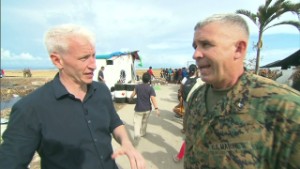 General Kennedy on typhoon
relief
General Kennedy on typhoon
relief  Clinic in Tacloban
overflowing
Clinic in Tacloban
overflowing  Typhoon survivors: Where is
the help?
Typhoon survivors: Where is
the help?
Its winds, 3.5 times as strong as
those of hurricane Katrina, pushed in a wall of water about 15 feet high,
washing away towns on many islands in the south of the country.
By Thursday morning, the official
death toll had climbed to 2,357. More than 3,800 were injured and about 77 are
still missing.
The sailors arrive to a scene of
desolation, where help comes too late for many, and international aid has piled
up at airports, blocked from distribution to the starving by miles of debris
piled up on roads to hard-hit areas.
It is taking a long time to clear
them and to establish communications in to remote areas, said Philippine
Interior Minister Mar Roxas.
"Imagine a situation where from
zero, from zero, no power, light, water, communication, nothing, you have to
build the social infrastructures as well as the physical infrastructures for
275,000."
Only 20 trucks are operating and
they are overloaded with tasks, he said. Half are delivering food; half are
clearing roads and removing dead bodies that have been lying around since the
storm hit.
He led a cadaver recovery team
himself on Tuesday and Wednesday, he said.
The danger of violence also
looms over the relief efforts.
Police warned a CNN crew to turn
back Wednesday on the road south of Tacloban, saying rebels had been shooting at
civilians.
"Maybe they are looking for
food," a police commander said.
Though progress is slow, Roxas
feels it is doubling by the day.
 'We miss our homes, have
nothing to eat'
'We miss our homes, have
nothing to eat'  Special type of aid needed in
Philippines
Special type of aid needed in
Philippines  Mayor of Tacloban's story of
survival
Mayor of Tacloban's story of
survival 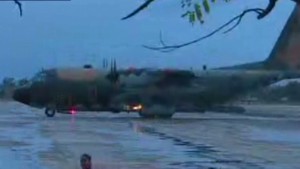 Storm survivors desperate for
aid
Storm survivors desperate for
aid
Moans
of despair
That could still be too slow for
the wounded and the sick, who have crowded into hospitals barely able to
operate, hardly supplied and often without electricity.
In Tacloban, which may have seen
the worst destruction, the cries of the suffering echoed through a small,
cramped one-story clinic, where the medicine was all but gone Thursday. But
patients keep pouring in.
The clinic at the airport in the
decimated capital city of Leyte province is one of the few places where the
injured can turn for help, but not much of it is to be found.
"We don't have any medicines. We
don't have any supplies. We have IVs, but it's running out," Dr. Katrina Catabay
told CNN.
"Most of the people don't have
water and food. That's why they come here. Most of the kids are dehydrated. They
are suffering from diarrhea and vomiting."
While relief organizations say
they have been able to deliver some of the stockpiles of aid to some victims,
many CNN crews reported seeing little sign of any large-scale organized relief
effort in the hardest-hit areas.
The desperation is increasing,
and becoming more serious.
"We mostly need food and water,
that's the most important," Catabay said. "We need supplies."
At the clinic, a Philippine
military officer called names off a clipboard, the names of those who will be
airlifted out of the city.
"The elderly, the children that
are sick" are the priority, the officer said.
For at least one man, the
evacuation came too late.
Australia: 30 million
U.N.: 25 million
UK: 24 million
U.S.: 20 million
Japan: 10 million
Denmark: 6.9 million
European Union: 4.1 million
Sweden: 3.6 million
UAE: 10 million
South Korea: 5 million
Canada: 4.8 million
Norway: 3.4 million
Switzerland: 3.4 million
Indonesia: 2 million
Spain: 1.8 million
New Zealand: 1.75 million
China: 1.6 million
Ireland: 1.4 million
Italy: 1.3 million
Mexico: 1 million
Austria: 690,000
Belgium: 690,000
Czech Republic: 214,000
Singapore:160,000
Vatican: 150,000
Vietnam: 100,000
Source: U.N. OCHA, government officials, reports
The man died at the clinic. His
body was put on a gurney and pushed to the end of a hallway because there is
nowhere to put him, the clinic staff said.
Death toll
climbs
By Thursday morning, the
official death toll had climbed to 2,357, disaster officials said. The typhoon
left 3,853 people injured and 77 people missing, according to the Philippines'
National Disaster Risk Reduction and Management Council.
The toll is "going to be
horrific," Philippine Interior Minister Mar Roxas said.
"There are still many towns that
have not sent in complete reports and out of the 40 towns of Leyte, for example,
only 20 have been contacted. So there's another 20 towns with no communication,"
he said.
"It's going to be a high death
toll. I don't want to go into just throwing out numbers."
Philippine President Benigno
Aquino III has said that he expected the final number would likely be around
2,000 to 2,500.
"Pushing aid" to
Tacloban
Some relief crews are
circumventing the blocked roads, wastelands of debris and the danger of crime by
flying over it, delivering aid by air into devastated areas.
U.S. Marines arrived Wednesday
in Cebu, transforming the sleepy airbase there into a buzzing center of activity
as cargo aircraft, tilt-rotor Ospreys and camouflaged Marines.
Two 747 airplanes loaded with
humanitarian aid from the United States have arrived, and Marines are "pushing
aid" from Cebu to Tacloban, Brig. Gen. Paul Kennedy said on CNN's "Situation
Room."
But they land to find themselves
hemmed in by debris.
"Some of those neighborhoods are
inundated with water, and some of it's inaccessible," Kennedy said. Marines will
need heavy machinery to clear the rubble, and getting it in won't be easy.
"It's a matter of capacity at
this point. This just doesn't come out of a box. It has to be moved down here.
It's a remote location," he said.
The Royal Australian Air Force
also landed at Cebu, delivering a portable field hospital that was soon sent on
its way to Tacloban. Taiwanese troops also arrived with medical aid, and Doctors
Without Borders said three of nine cargo shipments it has planned also arrived
in Cebu on Wednesday.
The planes carried medical
supplies, shelter materials, hygiene kits and other gear, the agency said.
U.N.: Pace of relief
lacking
Teams from Doctors Without
Borders also have reached remote Guiuan, a village of about 45,000 that was
among the first areas hit by the full force of the storm, the agency said.
"The situation here is bleak,"
said Alexis Moens, the aid group's assessment team leader. "The village has been
flattened -- houses, medical facilities, rice fields, fishing boats all
destroyed. People are living out in the open; there are no roofs left standing
in the whole of Guiuan. The needs are immense and there are a lot of surrounding
villages that are not yet covered by any aid organizations."
But the uptick in aid delivered
to the Philippines from abroad coincides with the opening of a road into
Tacloban, holding out the promise that food, water and medicine will begin to
flow more quickly.
But six days after the storm
struck -- with more than 2 million people in need of food, according to the
Philippine government -- even U.N. relief coordinator Valerie Amos acknowledged
the pace of aid is still lagging.
"This is a major operation that
we have to mount," she said Wednesday. "We're getting there. But in my view it's
far too slow."
Philippine President Aquino has
defended relief efforts, citing the challenges posed by the devastation.
Above all, he said, the
intensity of the storm took everyone by surprise.

No comments:
Post a Comment